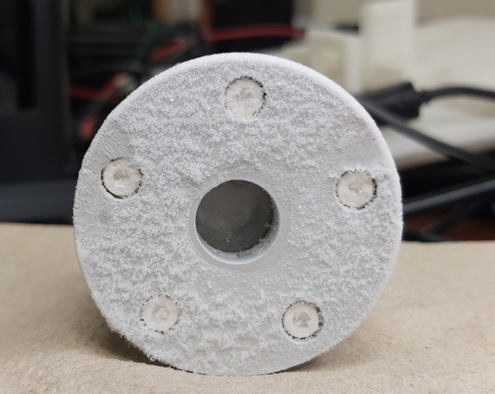
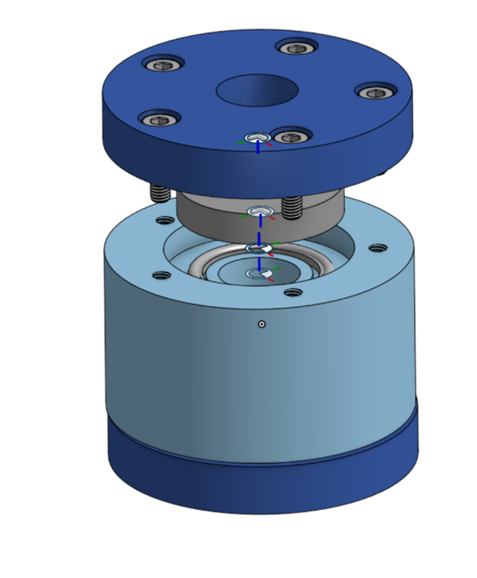
This study investigates the physical processes at work during the isochoric vitrification of an aqueous system, which plays a crucial role in preservation. The system is confined in a metallic isochoric chamber and directly submerged in liquid nitrogen to reach the low temperatures required for vitrification. The design of the chamber incorporates two Sapphire windows for direct visual observation of the vitrification process. Image processing and holography techniques are used to measure the proportion of vitrification to ice, liquid, and the cavity formed during this process.
Upon cooling, the metallic chamber contracts due to the substantial gap between its thermal conductivity and the thermal properties of the aqueous content within. Following this initial contraction, cold diffuses into the sample, causing the liquid to contract and resulting in the development of negative pressure. This contraction leads to the formation and growth of a cavity, and subsequent ice growth within this cavity. The liquid solution ripens and the remaining liquid eventually undergoes vitrification. This detailed examination of the isochoric vitrification process advances our understanding of aqueous preservation, paving the way for future enhancements in the field.